

.png)
U.S. Government Signs $1.6B CHIPS Act LOI with USA Rare Earth to Build Domestic Rare Earth & Magnet Supply Chain
Published: 2.3.2026
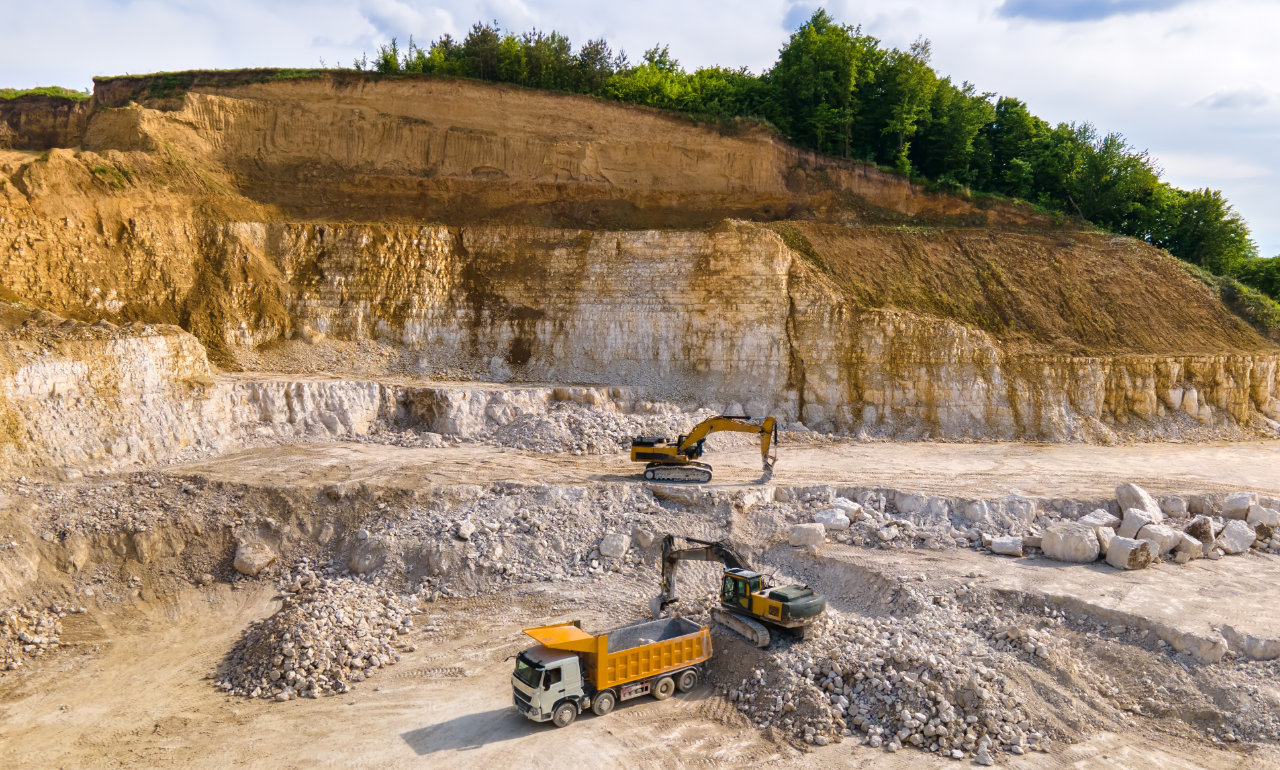
The U.S. Department of Commerce’s CHIPS Program Office has signed a non-binding letter of intent with USA Rare Earth Inc that could unlock up to $1.6 billion in government support, combining $277 million in proposed federal funding with a $1.3 billion senior secured loan under the CHIPS and Science Act, to accelerate development of domestic rare earth and magnet supply chain.
This milestone comes as part of a broader U.S. strategy to reduce reliance on foreign, particularly Chinese, dominance in rare earth processing and permanent magnet supply, critical bottlenecks for semiconductors, defense, EVs, robotics, and aerospace technologies.
“This investment ensures our supply chains are resilient and no longer reliant on foreign nations,” Commerce Secretary Howard Lutnick said in the company’s announcement, framing the project as a step toward rebuilding U.S. critical mineral independence.
Rare earths and permanent magnets are typically discussed through the lens of EV drivetrains or wind turbines, but the policy logic here also touches the semiconductor ecosystem: advanced manufacturing depends on specialized materials and precision systems that can become choke points when supply is concentrated.
Commerce’s CHIPS office explicitly tied the LOI to resilience in the supply chains supporting semiconductor manufacturing. In other words, the U.S. isn’t only asking, “Where will chips be fabricated?” it’s increasingly asking, “Do we control enough of the upstream inputs and industrial capacity that modern electronics manufacturing depends on?”
A Transformative Mine-to-Magnet Strategy
The USA Rare Earth’s “mine-to-magnet” plan aims to build a fully domestic production chain from upstream extraction to downstream magnet manufacturing:
Round Top, Texas (Upstream Mining + Processing):
The Round Top heavy rare earth deposit, one of the richest known in the U.S., is expected to begin commercial production in late 2028, now accelerated by approximately two years based on recent company updates.
The facility is designed to extract 40,000 metric tons per day of raw feedstock and process a combined 8,000 metric tons per year of mixed rare earth carbonate and other critical mineral oxides (including dysprosium, terbium, yttrium, gallium, hafnium, and zirconium) materials essential to advanced electronics, aerospace, and clean energy sectors.
Stillwater, Oklahoma (Downstream Magnet Production + Metallization):
USA Rare Earth plans to scale neodymium-iron-boron (NdFeB) magnet capacity to 10,000 metric tons per year, more than doubling earlier estimates, alongside 10,000 TPA of metallization and strip-casting capacity for rare earth metals and alloys that currently do not exist at scale in the United States.
The project’s accelerated deployment is reflected in both U.S. government backing and private capital. In conjunction with the CHIPS Act support, USA Rare Earth has arranged a $1.5 billion private investment in public equity anchored by institutional investors, bringing potential total capital to approximately $3.1 billion.
USA Rare Earth CEO Barbara Humpton described the agreement as a “transformative step” in securing and growing a resilient U.S. rare earth value chain, thanking federal leadership for recognizing the strategic importance of rare earth materials and permanent magnets.
Chairman Michael Blitzer added that the partnership aligns public and private incentives at unprecedented scale and speed to build capacity across feedstock, processing, metal production, and magnet manufacturing.
Crucially, the CHIPS Act support is structured around milestone-based funding releases, tying federal disbursements to operational progress across mining, processing, and manufacturing. CFO Rob Steele noted that these milestone structures “align taxpayer returns and the objectives of institutional investors,” ensuring disciplined capital deployment without government price supports or offtake requirements.
DOE Collaboration & Technology Development
In addition to Commerce’s office, USA Rare Earth has signed a separate LOI with the Department of Energy’s National Energy Technology Laboratory to advance heavy rare earth element separation technologies. This collaboration includes developing digital twin process models to accelerate pilot and commercial separation capabilities at the company’s Round Top and Wheat Ridge facilities.
Energy Secretary Chris Wright emphasized that the DOE’s efforts are part of broader work to end reliance on foreign sources for critical materials, expand domestic processing capability, and support high-paying American manufacturing jobs


