

.png)
U.S. Delays China-Origin Chip Tariff Hike Until June 2027
Published: 12.29.2025
Key Takeaways
- The policy is finalized but the additional tariff rate is 0% for now.
- A future increase is scheduled for June 23, 2027, with the actual rate disclosed at least 30 days prior.
- Scope centers on China-origin “legacy” semiconductors, which are deeply embedded in autos, industrial equipment, telecom, and infrastructure.
- The real impact for 2026 is pricing risk, contract structure, and origin traceability, not immediate supply disruption.
Current Update and Why It Matters to Buyers
Late 2025 brought a trade announcement that looks quiet on the surface but is strategically significant for procurement.
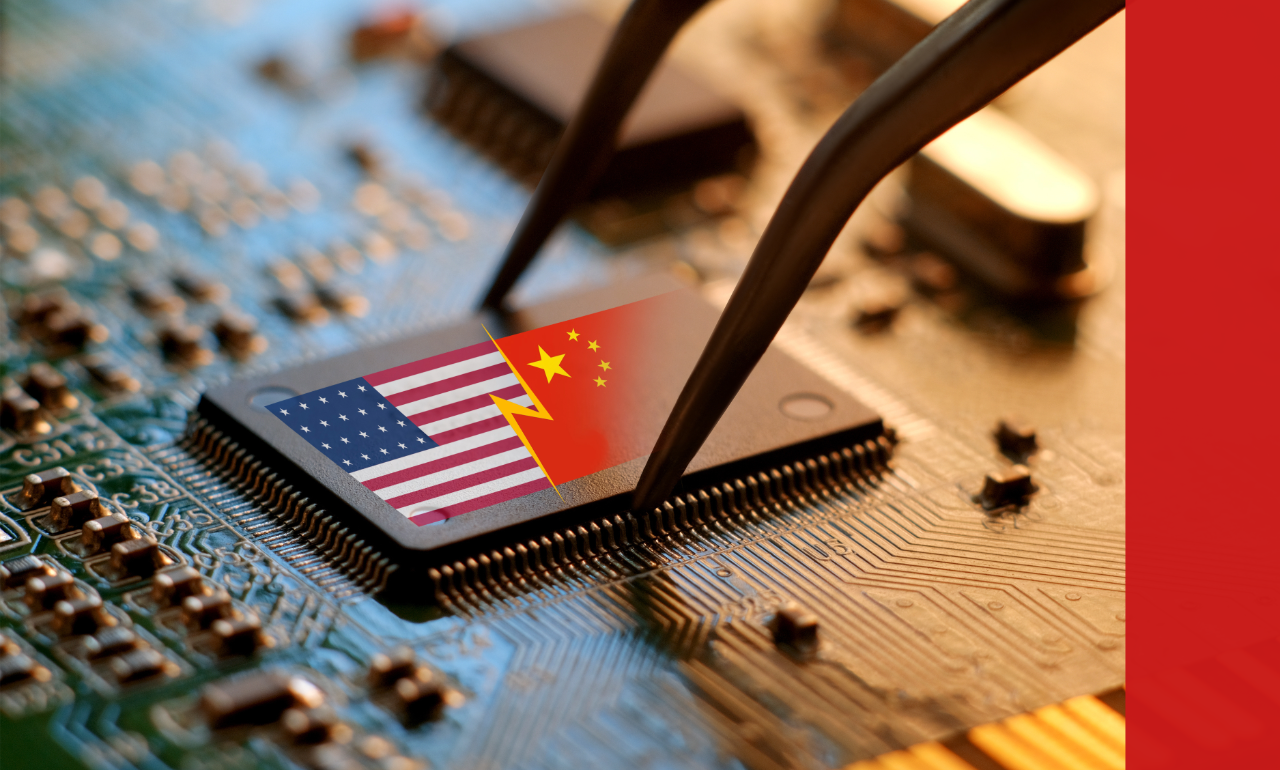
Following a year-long Section 301 investigation into China’s semiconductor industrial policies, the U.S. finalized a tariff framework targeting China-origin semiconductors and integrated circuits. The incremental duty is set at 0% today, with a scheduled increase in mid-2027. The rate itself remains undetermined until closer to implementation.
For procurement, the policy introduces a scheduled cost inflection point that should be factored into how sourcing, pricing, and contracts are planned in 2026.
Tariff that Functions as a Warning Label
This action behaves less like an immediate tax and more like a formal warning attached to a segment of the supply chain: China-origin chips are under policy scrutiny, and their landed cost may change on a fixed future date.
Importantly, the scope is aimed at integrated circuits and related semiconductor categories, commonly mapped under HTS 8542/8541 families (e.g., processors/controllers, memory ICs, other ICs, and related parts). These are the parts that don’t make headlines—but can stop production lines when cost or availability shifts.
Just as critical: the trigger is country of origin of the semiconductor itself, not where a finished product is assembled. That distinction directly affects:
- HTS classification accuracy
- Supplier origin declarations
- Customs documentation and audit readiness
- Management of mixed-origin inventory in distribution
Why Timing and Intent Matter for Procurement
This action is designed as a future inflection point rather than an immediate shock. The Section 301 investigation was initiated on December 23, 2024, with the tariff framework finalized a year later on December 23, 2025, setting the additional duty at 0% for now. The framework schedules a tariff increase on June 23, 2027, with the actual rate to be announced at least 30 days in advance. That structure makes 2026 the critical adjustment window for procurement teams to revisit sourcing, contract terms, and origin documentation before pricing uncertainty becomes enforceable cost.
The policy reflects growing concern that China’s state-backed industrial strategy is accelerating dominance in foundational semiconductor supply, with exposure across sectors considered critical to economic and national security, including automotive, industrial manufacturing, telecommunications, power infrastructure, defense, aerospace, and medical devices. Mature-node chips, long treated as commoditized inputs, are now being reframed as resilience infrastructure, fundamentally changing how governments assess risk in “everyday” components.
The delayed enforcement does not signal reduced trade pressure. Instead, it reflects structured pressure. By locking in the legal mechanism now while deferring the pricing impact, the U.S. is giving the market time to adjust, diversifying supply, strengthening origin traceability, and rethinking long-term pricing and contract commitments before enforcement tightens. This action also sits alongside other tariff measures already in force, underscoring that it is part of a broader, layered trade posture.
What's the Next Phase for Chip Trade
1) Legacy supply is now strategic
For years, trade policy and national-security attention focused on leading-edge logic and advanced nodes, that boundary has shifted. Governments are now treating mature-node, “legacy” semiconductors as strategic assets.
Controllers, analog ICs, power devices, and memory used in autos, industrial equipment, telecom systems, and infrastructure are no longer viewed as neutral commodities and are increasingly evaluated through a resilience and dependency lens, which makes them more likely to be pulled into future trade actions, compliance requirements, or origin scrutiny.
The practical implication: stable historical pricing and long-standing supply relationships are no longer guarantees. Even when availability is healthy, policy risk can reshape cost structures and sourcing assumptions with relatively short notice.
2) Policy is shaping behavior, not just revenue
The delayed tariff trigger is becoming a behavioral tool. By setting the rate at 0% today while locking in a future enforcement date, policymakers are signaling that the market is expected to adjust before costs formally rise.
In practice, this encourages buyers and suppliers to act earlier than they otherwise would:
Second-source qualification moves from “nice to have” to “time-bound priority”
Origin transparency becomes more important, even if it hasn’t historically affected pricing
Pricing assumptions grow more conservative as suppliers begin protecting against future exposure
The adjustment happens gradually and unevenly, but by the time the tariff rate is announced, much of the behavioral shift would have already taken place.
3) The impact shows up first in contracts
Despite the policy focus on imports, the earliest friction rarely shows up as delayed deliveries or immediate shortages. Instead, it appears quietly in commercial terms.
Common early signals include:
More frequent use of tariff pass-through clauses
Supplier resistance to fixed-price, multi-year commitments
Shorter quote validity windows to preserve pricing flexibility
Earlier and more aggressive pushes for alternate part qualification
These changes often surface well before any tariff is collected, because suppliers are managing future risk, not current cost.
A practical rule of thumb for buyers: Quoting or contracting programs that extend into 2027–2028, treat June 2027 as a defined re-pricing event. Set pass-through rules, re-quote triggers, and adjustment mechanisms now, while negotiating leverage still exists rather than trying to retrofit them once the tariff rate is announced.
What procurement teams should do in 2026
The biggest risk for procurement teams is being forced to renegotiate or re-source under deadline—after the market has already tightened. A practical rule of thumb: if you’re quoting or contracting programs that run through 2027–2028, treat June 2027 as a defined re-pricing trigger and set pass-through and re-quote rules now, not later.
In parallel, 2026 is the right window to:
- identify China-origin exposure at the part level
- qualify alternates where possible (before timelines compress), and
- tighten origin/traceability workflows so customs treatment is predictable.
How IBS Electronics Supports Tariff-Ready Planning
As procurement teams prepare for a known date with an unknown rate, IBS Electronics supports customers by mapping alternate sources, identifying function-compatible parts, and helping teams plan buys around program milestones so landed-cost risk is reduced without overbuying. For long-lifecycle programs where changes are difficult, IBS can also support continuity planning and traceability documentation available from suppliers to help keep import processes predictable.


