

.png)
Data Center Backlash Grows: GRID Act Targets Power-Bill Impacts as States Revisit Tax Breaks
Published: 2.16.2026

Key Takeaways
- Congress is moving to shield residential electricity rates from large data center load growth. The bipartisan GRID Act would require facilities ≥20 MW to prove they do not raise consumer power bills or transition to off-grid energy sources.
- Transparency and cost allocation are becoming central policy themes. The proposed legislation mandates federal review of interconnection costs, infrastructure impacts, and public disclosure of certain utility agreements, prioritizing residential ratepayers.
- States are revisiting data center tax incentives even as hyperscale construction accelerates. Georgia’s SB 436 would suspend certain tax exemptions and restrict nondisclosure agreements, while Meta has broken ground on a 1GW, $10+ billion campus in Indiana.
For years, data centers were largely framed as economic development wins bringing construction jobs, long-term investment, and digital infrastructure to local communities. In 2026, the framing is shifting as the central issue becomes its increaasing electricity rates.
As AI workloads push data centers into industrial-scale power demand, communities and regulators are asking a sharper question who pays for the grid upgrades required to serve these facilities?
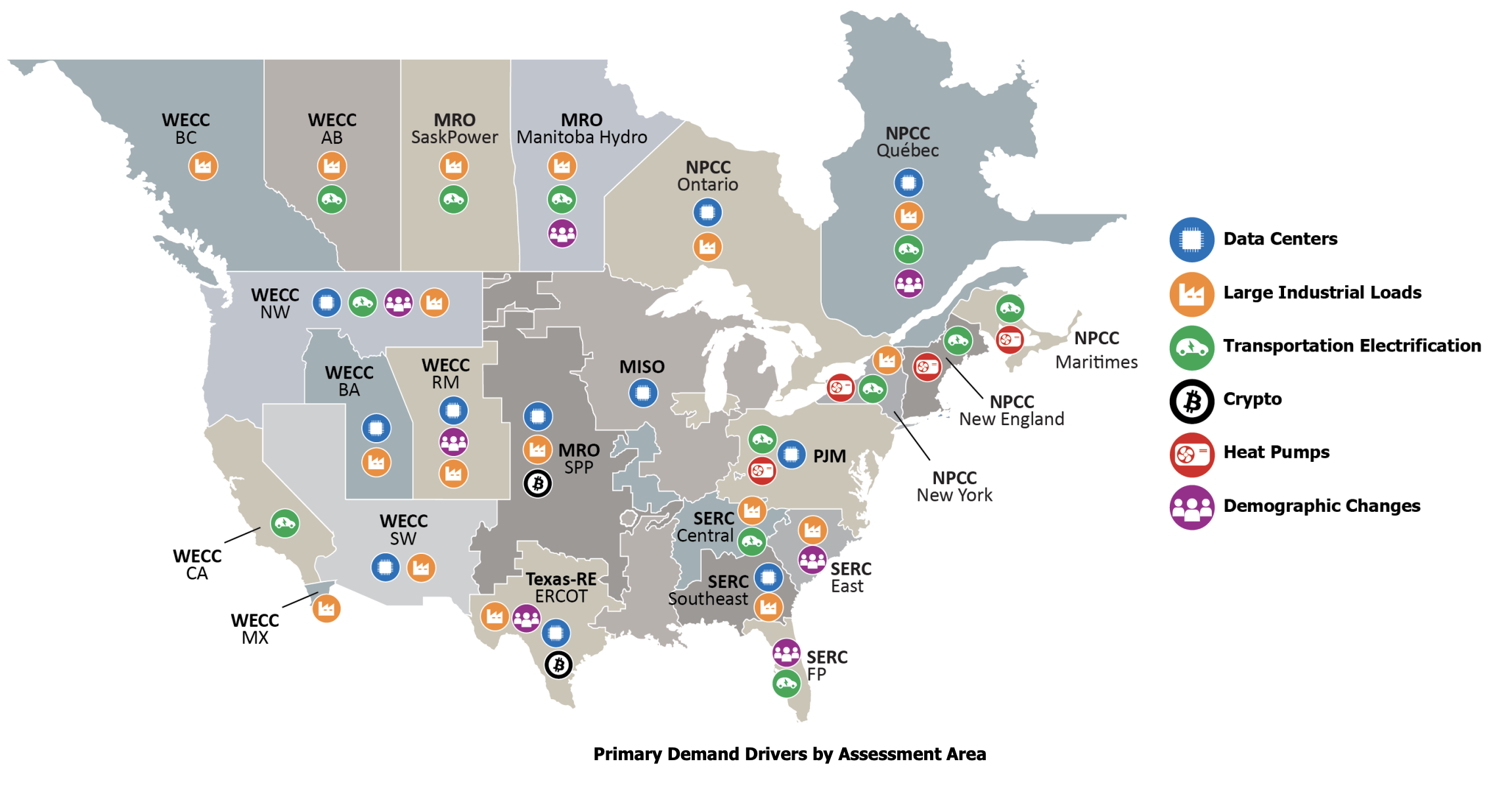 Figure 1 NERC identifies large loads, including data centers, as primary demand drivers across multiple regions, reshaping grid planning. Source: NERC LTRA (2026 release)
That question is now driving coordinated political action: a new bipartisan federal proposal to prevent data centers from raising consumer energy costs, and state-level bills aimed at slowing growth by tightening incentives and forcing transparency.
At the same time, Big Tech is still accelerating buildouts as Meta has begun construction on a 1-gigawatt (1GW), $10B+ data center in Lebanon, Indiana, underlining why lawmakers see urgency, a gigawatt scale data center becomes major load centers that can influence transmission upgrades, substation construction, and long-term generation planning.
That creates a public-facing risk in recovering utility costs through general rates, households and smaller businesses can end up subsidizing infrastructure built to serve a concentrated set of new mega-loads. This “cost-shifting” concern is increasingly the center of the debate, with bipartisan frustration growing around the idea that tech companies should pay their “fair share”even if there’s disagreement on how to enforce it.
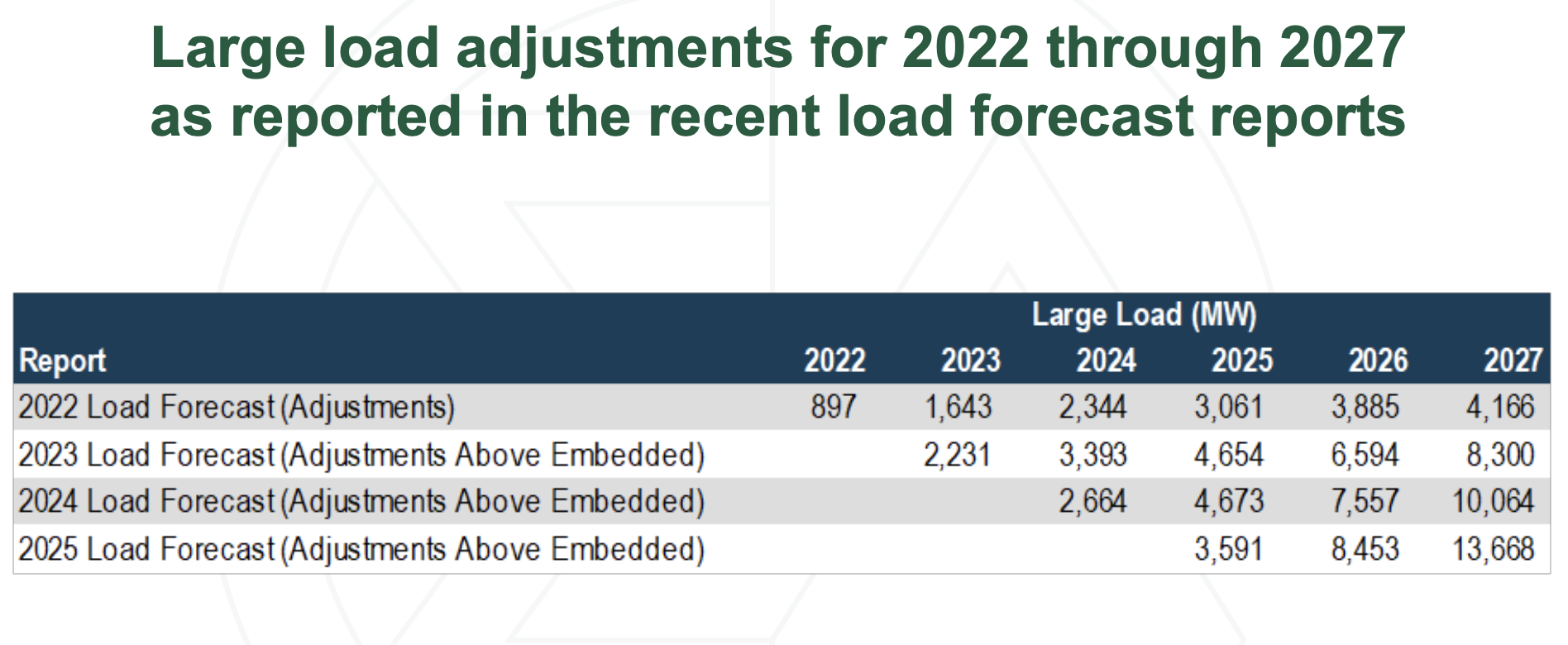 Figure 2 As large-load forecasts rise, system procurement and infrastructure needs can increase, intensifying scrutiny over who ultimately pays. Source: PJM IMM report
The Federal Response: The GRID Act
On February 12, 2026, Senators Josh Hawley and Richard Blumenthal introduced the Guaranteeing Rate Insulation from Data Centers (GRID) Act, a bipartisan proposal focused on preventing residential electricity rate increases linked to large data center interconnections.
The bill applies to data centers with power demand of 20 megawatts (MW) or more. Its central mechanism is that new covered facilities would be required to derive all energy, including backup power, from sources separate from the electric grid beginning 180 days after enactment.
Existing grid-connected facilities would be given a 10-year compliance window. Continued grid use would require a “Zero Rate Effect Certificate” issued by the U.S. Department of Energy. The certificate would depend on a federal determination that the data center does not increase electricity rates, including review of cost allocation for interconnection and infrastructure, peak demand impacts, and offsetting mechanisms. The bill explicitly directs the Department of Energy to prioritize residential ratepayers in its evaluation and rulemaking.
The legislation also mandates national public disclosure standards within 90 days of enactment. These would include reporting of current and projected utility usage, along with disclosure of certain utility service agreements such as subsidies, cost-sharing arrangements, or related incentives. Violations of the off-grid requirement would carry civil penalties of not less than $1 million per day.
The GRID Act remains at the introduction stage, but its scope signals that data center electricity rate impacts have moved into federal legislative focus.
State-Level Scrutiny: Tax Exemptions and Transparency
At the state level, lawmakers are examining different levers, particularly tax incentives and confidentiality agreements.
In Georgia, Senate Bill 436 was introduced on January 29, 2026. The proposal would prohibit local governments from entering nondisclosure agreements that prevent disclosure of electricity or water usage by data centers. It would also suspend the issuance of new sales and use tax exemption certificates for certain high-technology data center equipment from July 1, 2026, through June 30, 2027, subject to limited grandfathering provisions tied to preexisting contracts and applications.
The bill was read and referred in the Georgia Senate following introduction.
Taken together, federal and state actions indicate a coordinated reassessment of how data center tax incentives, grid infrastructure costs, and consumer electricity rates interact.
Market Activity Continues: Meta’s 1GW Indiana Project
While legislation advances, large-scale construction continues.
On February 11, 2026, Meta announced it had broken ground on a 1-gigawatt (1GW), $10+ billion data center campus in Lebanon, Indiana. The company stated that the project will support more than 4,000 construction jobs and approximately 300 operational roles.
A 1GW data center represents infrastructure at the scale of major industrial load. Public reporting has noted that this level of capacity is comparable to the electricity consumption of hundreds of thousands of homes, underscoring why such projects are closely watched by regulators, utilities, and state lawmakers.
The Indiana development illustrates the broader dynamic shaping the current debate: data center expansion is accelerating at the same time policymakers are reevaluating grid cost allocation and rate impacts.


