

.png)
Japan’s First Commercial Floating Offshore Wind Farm Begins Operation Off Goto City
Published: 1.7.2026
Key Takeaways
- Japan has launched its first commercial floating offshore wind farm, a 16.8 MW project off Goto City that validates floating wind as a viable solution for deep-water deployment.
- The project supports Japan’s national target of 10 GW offshore wind by 2030 and a 45 GW pipeline by 2040, with floating wind expected to play a central role.
- Reliable electrical, control, and monitoring systems will be critical for long-term offshore operations, driving demand for spare-parts sourcing and supply-chain resilience.
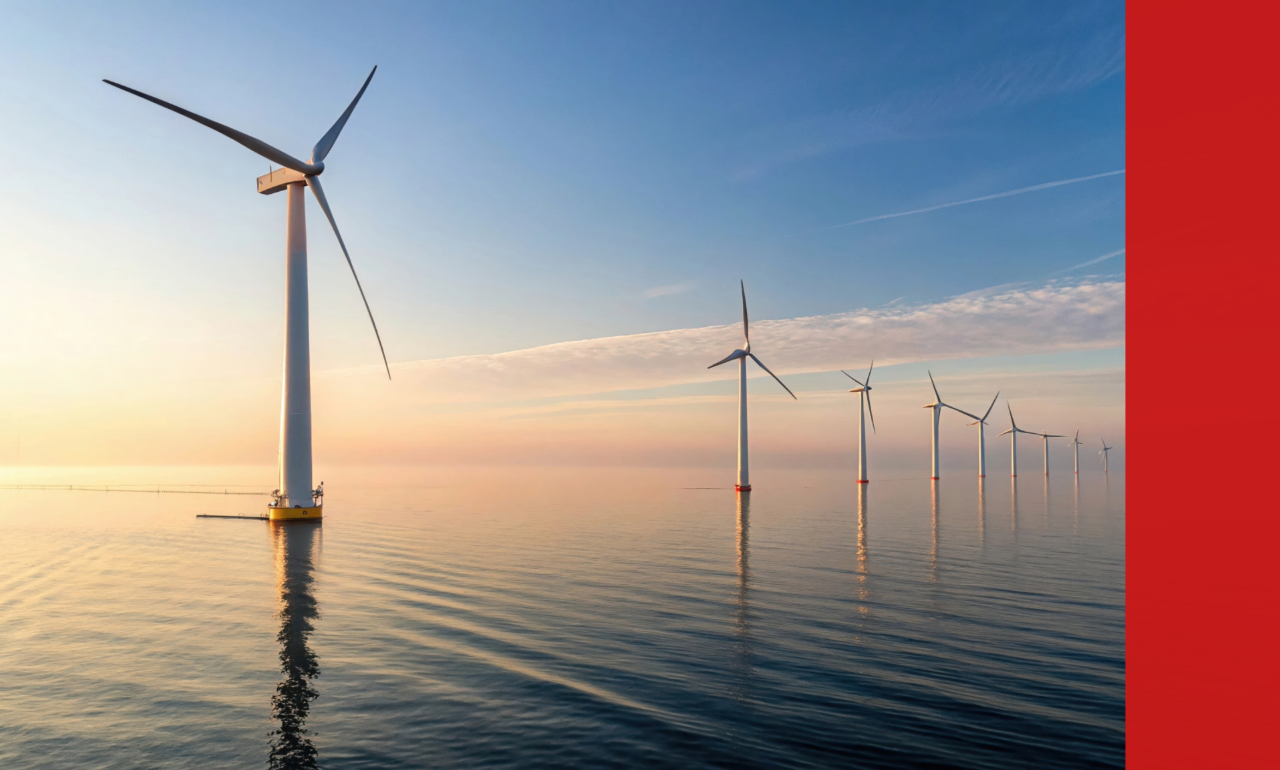
A major milestone in Japan’s renewable energy transition was achieved on January 5, 2026, as a consortium led by TODA Corporation officially began commercial operations at the Goto Offshore Wind Farm, the country’s first commercial floating offshore wind project. The 16.8-megawatt wind farm is located offshore of Goto City in Nagasaki Prefecture and marks a significant technological and policy breakthrough for Japan’s offshore wind ambitions.
The project comprises eight 2.1 MW wind turbines installed on hybrid spar-type floating foundations with a steel upper section and a concrete lower section, a design developed and built by TODA Corporation. This hybrid structure represents the world’s first commercial application of such a technology and is suited to the deep waters of western Japan, where fixed-bottom foundations are not feasible.
Owned and operated by Goto Floating Wind Farm LLC, the consortium includes TODA Corporation, ENEOS Renewable Energy Corporation, Osaka Gas, INPEX Corporation, Kansai Electric Power Co. (KEPCO), and Chubu Electric Power. Many local companies participated in construction and are expected to play key roles in operations and maintenance (O&M), strengthening regional economic involvement.
Under Japan’s Marine Renewable Energy Sea-Area Utilization Act, the project received its public occupancy plan certification, valid for 30 years from April 26, 2022 to April 25, 2052, with sea-area occupancy rights running from July 1, 2022 to June 30, 2052.
Japan’s Offshore Wind Strategy
Japan has set ambitious offshore wind targets as part of its drive toward carbon neutrality by 2050. The government aims for at least 10 GW of installed offshore wind capacity by 2030 and a pipeline of up to 45 GW by 2040, including 15 GW or more from floating wind projects. Floating technology is essential given Japan’s deep continental shelf and limited shallow water sites suitable for fixed-bottom turbines.
To support this growth, the Japanese government has expanded legal frameworks and regulatory pathways, including new laws enabling offshore wind development in the country’s Exclusive Economic Zone extending development potential beyond the traditional 12-nautical-mile limit to encourage investment and help unlock vast areas of deepwater sites. Industry bodies and new alliances such as the Floating Offshore Wind Technology Research Association are advancing technology and collaboration to overcome barriers and reduce costs.
Despite these efforts, the sector has faced challenges from rising equipment costs and project cost inflation; some developers, including Mitsubishi Corporation’s unit, have withdrawn from planned projects, pushing the government to re-auction those sites.
The Goto Offshore Wind Farm’s commercial start demonstrates Japan’s strategic pivot toward floating offshore wind where it can utilize its extensive deepwater coastlines. Expanding floating wind capacity is seen as key to meeting national targets for clean energy, reducing reliance on imported fossil fuels, and supporting local employment and technology development. As the country scales up future projects including larger fixed-bottom and floating wind farms, innovations in design, manufacturing, and supply chain resilience will be essential for achieving long-term renewable deployment goals.
Technical and Economic Implications
Floating wind farms like Goto rely on robust maintenance of electrical systems, monitoring equipment, and power electronics to ensure long-term reliability in challenging offshore conditions. Renewable energy operators and EPC teams typically require industrial sensors, condition-monitoring electronics, power conversion controls, connectors and networking components to support stable O&M. Reliable spare-parts supply and continuity planning are critical to operational uptime and cost control.
For companies managing offshore renewable assets, IBS Electronics services in spare-parts sourcing and logistics continuity planning for electronic components used in power and control systems can support O&M readiness and help reduce supply-chain disruptions.
Need help building a renewable-energy spares plan? Talk to an IBS Electronics specialist about sourcing critical spare parts for offshore wind electrical, control, and monitoring systems.


