

.png)
Envision Group Considers US$34 Million Battery Plant in India as Energy Storage Demand Accelerates
Published: 11.28.2025
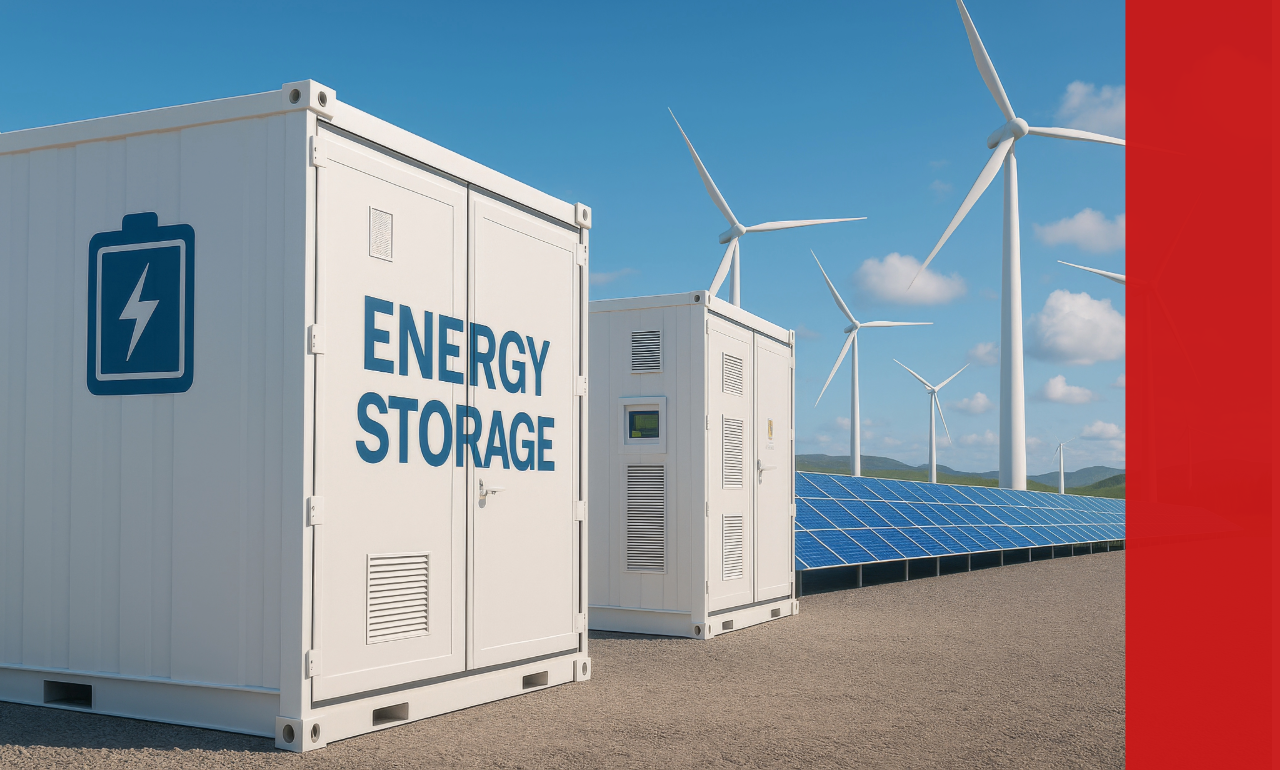
- Envision Group is exploring a US$34 million battery energy storage system (BESS) assembly plant in India, targeting around 5 GWh of annual capacity.
- The facility would integrate imported cells with locally engineered racks, software, and system-level design.
- A final investment decision is expected in 12–18 months, depending on policy incentives and the pace of new storage tenders.
China’s Envision Group is exploring a plan to build a new battery energy storage facility in India because of the country’s urgent need for large-scale storage as its power grid shifts rapidly toward clean energy. According to reporting from The Times of India, the project under evaluation involves an initial investment of about US$34 million and would focus on assembling battery energy storage systems rather than manufacturing cells.
Why India Has Become a Priority Market for Battery Storage
The proposed plant would be designed to handle around 5 GWh of annual capacity, with the core battery cells imported from China while system integration such as the battery racks, engineering, and software would be developed in India. Envision executives quoted in Indian media say the company aims to localize real engineering work rather than simply import and resell equipment.
India’s energy landscape is undergoing a major transition with renewables are growing faster than the transmission and storage infrastructure built to support them. Analysts from the IEA and Reuters estimate that non-fossil power capacity accounted for around half of India’s installed base by mid-2025. Solar alone has added record capacity, becoming cheaper than new coal power.
Yet the country continues to face challenges as grid operators sometimes curtail renewable output simply because there is not enough storage available to absorb excess daytime power or balance the evening demand spike. Experts widely agree that India cannot fully rely on solar and wind without building large-scale battery systems and pumped hydro storage. This is exactly the segment Envision is targeting: grid-connected batteries that support renewable integration, stabilise the grid, and enable reliable EV charging infrastructure.
Envision’s Expanding Footprint in India
Envision is not starting from scratch in the country as the group already operates in both wind and storage markets. Earlier in 2025, Envision Energy India secured a 1 GW wind turbine order alongside a 320 MWh battery storage order from Juniper Green Energy. That system will support a Firm Dispatchable Renewable Energy (FDRE) project, designed to supply renewable power as a stable on-demand source something that requires advanced BESS technologies, power electronics, and high-reliability battery modules.
The company already runs manufacturing facilities in Pune and Tiruchirappalli and employs more than 3,000 people. Adding a dedicated BESS assembly facility would extend the company’s reach deeper into India’s clean energy value chain, strengthening India’s position as a regional hub for renewable and storage technology.
What This Means for the Energy, EV, and Industrial Supply Chain
If Envision proceeds, a 5 GWh-class BESS plant would create new opportunities for suppliers across power electronics, thermal management, and energy storage components. India’s push for manufacturing localisation, combined with Envision’s strategy, could make the country an important export base for integrated BESS solutions in the Asia-Pacific region.
The project may also deepen the link between grid-scale storage and EV charging. Envision’s global portfolio includes smart storage systems used in building energy management, industrial power backup, and EV charging hubs suggesting that an India facility could support multiple segments beyond utility-scale projects.
The coming year will determine whether Envision moves ahead. The company’s final decision will hinge on market growth, clarity on India’s incentive schemes for energy storage, and the pace at which grid-scale storage tenders are announced. India’s ability to resolve previous challenges around renewable project cancellations and transmission bottlenecks will also shape the long-term investment outlook.


